
Bee Sting: What to Do First, What to Put on It, How Long Swelling Lasts, and When to Call 1669
Written by Dr. Patara Voravutinon, Dermatologist · Last reviewed November 26, 2026
If a bee stings you, first stay calm, move slowly away from the bees, and get the stinger out as quickly as possible. Then wash the area and cool it. Most people only get pain, redness, swelling and itching around the sting, which settle within hours to a few days. If you have trouble breathing, swelling of the face, lips or throat, or hives all over the body, call 1669 (Thailand's emergency medical number) immediately.
Bee sting first-aid checklist
Remove the stinger with a stiff card, such as a plastic card: hold the edge against the skin and scrape sideways along the skin. Do not squeeze it and do not use tweezers, as this can push more venom from the venom sac into the skin. If no card is at hand, use a fingernail; do not waste time looking for a tool.
Wash with soap and clean water.
Apply a cold compress for 10–15 minutes, with ice wrapped in a cloth, never ice directly on the skin. Rest, then repeat from time to time.
Raise the stung area, for example rest the arm or leg on a pillow, to reduce swelling.
Do not scratch, as scratching can break the skin and lead to infection.
This article covers what to do after a bee sting, how wasp and hornet stings differ, what to put on a sting, how long swelling lasts, and which allergic reactions need hospital care, written by a dermatologist at Siam Dermatology. For an overview of rashes and wounds from other insect bites and stings, see our guide to skin reactions from insects.
What happened to Thai TV host Tonhom Sakuntala on Loy Krathong?
Short answer: According to the Thai news site news.in.th, TV host Tonhom Sakuntala was stung by a bee on 24 November 2026, which was Loy Krathong day, and developed red rash spots in several places.
She posted photos of the red marks after the sting and shared what happened and how she was doing with her fans.
After the post, fans sent messages of concern, first-aid tips and good wishes.
This article does not diagnose the person in the news, because working out the cause of a rash needs a history and an examination by a doctor. The story is, however, a good reminder of correct first aid, as the end of the year brings many outdoor and waterside events.
Are bee, wasp and hornet stings different?
Short answer: First aid is the same. The difference is the stinger: bees usually leave the stinger and venom sac in the skin and can sting only once, while wasps and hornets usually do not leave a stinger but can sting several times.

Image: Waugsberg · CC BY-SA 3.0
Bees have a barbed stinger that stays in the skin. Most of the venom is released soon after the sting, which is why removing the stinger quickly matters.
Wasps and hornets usually leave no stinger, but they can sting again. Brush them off gently and leave the area quickly.
Many stings at once, whether from bees, wasps or hornets, need a doctor's review even without allergy symptoms.
Some insects do not sting but cause a rash in other ways, such as the burning, streak-like rash from the body fluid of the Paederus (rove) beetle, which is managed differently from a bee sting.
What should you put on a bee sting, what can you take, and do balm, vinegar or lime help?
Short answer: Most local reactions only need a cold compress. For itching, an anti-itch cream or an oral antihistamine can help, and a common pain reliever can be used for pain. Menthol balm, vinegar and lime juice do not neutralise bee venom.
Creams and lotions
A mild steroid cream or calamine lotion can reduce itching and redness. Apply thinly to unbroken skin.
Antibiotic creams are not needed unless the wound is infected.
Medicines by mouth
An oral antihistamine from the less-drowsy group can reduce itching and swelling. Our guide to anti-itch medicines and antihistamines explains the types.
A common over-the-counter pain reliever can be used if the pain is strong.
Ask a pharmacist or doctor which type and amount suit you, especially for children, pregnant people, older adults and anyone with a long-term condition.
Do menthol balm, vinegar or lime help?
Menthol or herbal balm does not treat bee venom. It may feel cooling or warming for a while, but it can irritate the skin. Do not use it on scraped, broken or blistered skin, and wash it off if it stings or the redness gets worse.
Lime juice: the Thai Food and Drug Administration states that the belief that lime juice neutralises bee venom is not true, and the acid may add irritation.
Vinegar: there is no good evidence that it neutralises the venom, and it can sting on broken skin.
Ice wrapped in a cloth and clean water remain the safe options that really help pain and swelling.
How long does bee sting swelling last?
Short answer: Local swelling usually improves within about 24 hours to a few days. Very large swelling can last up to about a week. A whole-body allergic reaction should never be watched at home: call 1669.
Severity | What you see | Usually settles | What to do |
Local reaction | Pain, redness, swelling and itching around the sting | Within about 24 hours to a few days | Follow the first-aid checklist; home care is usually enough |
Large local reaction | Red swelling wider than 10 centimetres, such as the whole hand or arm, with no symptoms elsewhere | Can last up to about a week | Cold compress and raise the area; ask a pharmacist or doctor, and see a doctor if it keeps spreading or the sting is near the eye or in the mouth |
Whole-body allergic reaction | Hives in several places, swelling of the face, lips or throat, trouble breathing, dizziness, nausea or vomiting | Do not wait and watch | Call 1669 or go to the emergency department immediately |
Large swelling in the first days does not always mean infection; it is usually a reaction to the venom.
If redness that was improving gets worse again, feels hot, becomes more painful or produces pus, it may be infected. See the next sections.
If the swelling has not settled after a week, or itchy lumps last for several weeks, have a dermatologist check it.
Which allergic reactions to a bee sting need a 1669 emergency call?
Short answer: Most people do not have a severe allergy. But if any of the following happens after a sting, even a single sting, call 1669 (Thailand's emergency medical number) or go to the emergency department immediately.
trouble breathing, fast breathing or wheezing
swelling of the lips, tongue, throat, face or eyes, trouble swallowing or a hoarse voice
hives or an itchy red rash in several places over the body
feeling faint, dizzy, drowsy or confused
nausea, vomiting or severe tummy pain
pale or bluish skin, lips or tongue
Severe allergic reactions usually start within minutes of a sting. While waiting for help, keep the person still: sitting up if breathing is difficult, lying flat if dizzy. If a doctor has prescribed an emergency auto-injector for severe allergic reactions, use it as you were taught.
See a doctor promptly, even without allergy symptoms, if:
you were stung in the mouth, throat or near the eye
you were stung many times
you have had a severe reaction to a bee sting before
a young child has unusual symptoms after a sting
Anyone who has had a whole-body reaction to a bee, wasp or hornet sting should talk to a doctor about insect venom allergy testing and how to prepare for the future. For hives with breathing difficulty, read more in our hives (urticaria) guide.
When should you see a dermatologist for pus or spreading redness?
Short answer: If a sting that should be getting better becomes more painful, the hot redness spreads, pus appears or you develop a fever, it may be a secondary infection. See a doctor rather than waiting for it to clear.
Signs to see a doctor:
pus or fluid coming from the sting
hot, red skin around the sting with redness that keeps spreading
red streaks running up the arm or leg, or fever and chills
blisters that break open into a wound
swelling that has not settled after a week, or itchy lumps lasting several weeks
In the meantime, do not squeeze or pierce pus or blisters; keep the area clean and covered. Our guide to infected wounds and pus explains basic wound care. If a wide area of skin becomes red and hot, it could be cellulitis, which needs a doctor's examination and treatment.
A dermatologist can assess infected stings and allergic rashes that do not go away, but for a severe allergic reaction always call 1669 first.
How can you prevent bee, wasp and hornet stings?
Short answer: Stay away from nests, do not swat, cover sweet food and drinks, and wear covering clothes and shoes outdoors.
If bees or wasps fly nearby, stay calm and walk away slowly; do not swat or wave your arms.
Avoid brightly coloured clothes and strong perfume outdoors.
Keep food and sweet drinks covered, and check cans and straws before drinking.
Wear closed shoes and do not walk barefoot on grass.
If you find a nest near your home, do not remove it yourself; ask an experienced person or a local service to deal with it.
If you have had a severe reaction before, carry the emergency medicine your doctor prescribed and tell the people around you about your allergy.
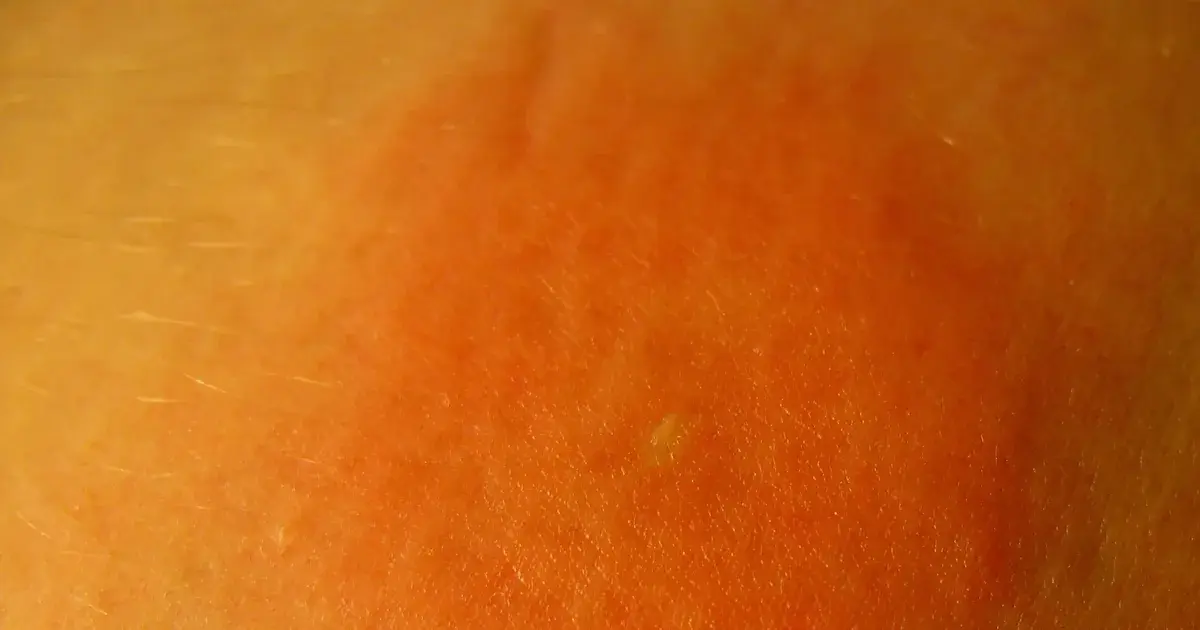
Cover image: SuperManu · CC BY-SA 3.0 · cropped
Frequently asked questions about bee stings
What if I can't find the stinger?
If you cannot see a stinger, do not dig or squeeze for it. Wasps and hornets usually do not leave one, and a bee stinger may already have fallen out. Wash with soap, apply a cold compress, raise the area and avoid scratching. See a doctor if it still feels as if something is stuck, the pain gets worse, or the redness and swelling do not settle within a few days.
How long does bee sting swelling last?
Local swelling usually improves within about 24 hours to a few days. Very large swelling, for example more than 10 centimetres or the whole hand or arm, can last up to about a week. See a doctor if the swelling keeps spreading, does not improve, or you have symptoms elsewhere in the body.
Can I put a menthol balm on a bee sting?
A menthol or herbal balm does not neutralise bee venom. It may feel cooling or warming for a while, but it can irritate some people's skin, so do not use it on scraped, broken or blistered skin. If it stings or the redness gets worse, stop and wash it off. A cold compress works better for pain and swelling; ask a pharmacist about an anti-itch cream if itching is strong.
Which antihistamine should I take for a bee sting?
For itching or swelling, an oral antihistamine from the less-drowsy (non-sedating) group is commonly used. Ask a pharmacist or doctor to choose the type and amount that suit your age, health conditions and other medicines, especially for children, pregnant people and older adults. Antihistamines help local itching and swelling but do not treat a severe allergic reaction; call 1669 for breathing trouble or facial swelling.
Is facial swelling after a bee sting dangerous?
If you were stung on the face and the swelling stays around the sting, it is usually a local reaction that can be managed with a cold compress, but see a doctor if the sting is near the eye or inside the mouth. If your face, eyes, lips, tongue or throat swell after a sting elsewhere, or you have trouble breathing or swallowing, widespread hives or dizziness, call 1669 immediately.
What should I do if a bee sting has pus?
Pus can be a sign of a secondary infection, often after scratching or if the wound got dirty. Do not squeeze or pierce it yourself. Rinse with clean water and mild soap, keep it covered, and see a doctor to decide whether treatment is needed. Seek care promptly if hot redness spreads, red streaks run up the arm or leg, or you have a fever.
See a dermatologist at Siam Dermatology
If a bee sting stays red and swollen, itches for a long time, produces pus or the redness spreads, you can book a visit with a dermatologist at Siam Dermatology. The doctor will take your history, examine your skin and advise care that suits you. If you have trouble breathing or swelling of the face or throat, call 1669 immediately rather than waiting for an appointment. Directions are on the Samut Prakan clinic page.
Appointments can be made via LINE @siamderm or by calling 061-448-7000.
Hours: Monday–Friday 16:00–20:00, and Saturday–Sunday 08:00–16:00.
Wednesday: no general dermatology OPD (laser and skin surgery are open)
References
NHS. Insect bites and stings (page last reviewed 1 October 2026)
American Academy of Dermatology (AAD). How to treat a bee sting
American Academy of Allergy, Asthma & Immunology (AAAAI). Stinging insect allergy
Thai Food and Drug Administration (Oryor). Does lime juice neutralise bee venom? (in Thai)
Consumer Capacity Development Division, Thai FDA. First aid for venomous bites and stings (in Thai)


Comments