
What Does an HIV Rash Look Like? Types of Rash, Explained by a Dermatologist: Early-Stage and Low-Immunity Rashes, and Why a Rash Alone Cannot Show Whether You Are Infected
Many people who worry they may have been exposed to HIV start by looking at a rash on their skin and searching for "what does an HIV rash look like." In truth, the skin is one of the organs that reflects immune status most clearly, so people living with HIV often have skin problems throughout the course of the disease. But these rashes come in many forms and resemble several common skin conditions.
In this article, a dermatologist explains how many groups of HIV-related rashes there are, what each one looks like, how to make a first assessment, and most importantly, why a "rash alone" cannot tell you whether you are infected, and what to do next.
Why does HIV infection cause rashes?
HIV can cause skin problems through two main mechanisms, which divide rashes into two large groups:
Rash caused by the virus itself in acute infection — occurs in the first few weeks after exposure, as the body reacts to a rapidly multiplying virus.
Rash caused by a weakened immune system — as CD4 white blood cells steadily fall, the skin becomes vulnerable to opportunistic infections and to several skin diseases that are more severe or unusual than in the general population.
Understanding these two groups shows that an "HIV rash" does not look just one way.
What does an early-stage HIV rash look like?
The early rash, part of acute retroviral syndrome, is what most people mean by an "HIV rash." It usually appears about 2–4 weeks after exposure and has these typical features:

A flat red rash mixed with small raised bumps (maculopapular), pink to red, a few millimetres in size
Spread mainly over the upper trunk, chest, back, neck and face; in some people it extends to the palms and soles
Usually only slightly itchy or not itchy at all, and usually clears on its own within 1–2 weeks
Most importantly, it usually comes with whole-body symptoms rather than appearing as an isolated rash
Common accompanying symptoms at this stage, which help distinguish it from an ordinary allergic rash, include:
Fever, tiredness, muscle and joint aches
Sore throat and swollen lymph nodes in several areas
Sores in the mouth, throat or genitals
Some people have diarrhoea or weight loss
This set of symptoms closely resembles influenza or an ordinary viral fever, so it is often overlooked. If you have a rash like this together with fever after a risk exposure within the past month, HIV should be considered and you should get tested.
What rashes occur when immunity is low?
When the disease progresses untreated and CD4 falls, a wide range of opportunistic skin diseases can appear. They fall into these groups.
Viral infections

Herpes simplex and shingles that are unusually severe, with chronic slow-healing sores, frequent recurrences, or shingles affecting several nerves at once. Shingles in a young person in particular should prompt consideration of immune deficiency.

Molluscum contagiosum that appears in large numbers, with unusually large bumps, often on the face, unlike in otherwise healthy children, where it usually appears on the body.
Fungal infections (very important in Thailand)
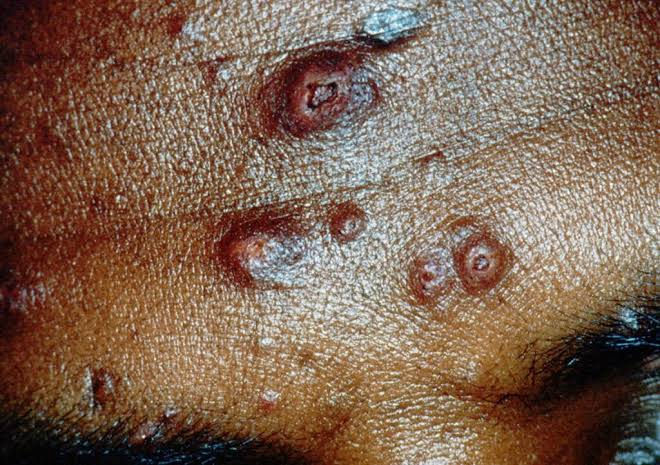
Penicilliosis, or talaromycosis (Talaromyces marneffei) — raised bumps resembling molluscum with a central dimple on the face, neck and trunk. It is a fungus endemic to Southeast Asia and a sign of very low immunity.
Common skin fungal infections such as ringworm, tinea versicolor and oral thrush (Candida) that are widespread, long-lasting or resistant to treatment.
Inflammatory and itchy rashes

Seborrheic dermatitis that is severe and unusually widespread is one of the most common skin signs in people living with HIV.
Papular pruritic eruption — itchy red bumps scattered over the arms, legs and trunk, common in people with HIV in tropical regions, including Thailand.
Eosinophilic folliculitis — very itchy red bumps around hair follicles on the chest, back and face.
Existing conditions that flare severely, such as psoriasis and crusted scabies.
Tumours

Kaposi sarcoma — purple-red to dark brown patches, bumps or lumps, usually painless and not itchy, which can appear on the skin, the roof of the mouth and the nose. It is a cancer directly associated with HIV.
Drug rash
People living with HIV are more likely to have drug allergies than the general population, particularly to some medicines used to treat and prevent complications, and have a higher risk of severe drug rash (SJS/TEN). Watch for a rash that appears with fever, mouth sores, red eyes or peeling skin.
How does an HIV rash differ from an allergic or ordinary rash?
This is where people become anxious and often misdiagnose themselves, because an early HIV rash is almost indistinguishable from other viral rashes, drug rashes or secondary syphilis rash. What helps raise suspicion is not the look of the rash alone but the overall context:
A history of risk in the previous 2–4 weeks, such as unprotected sex or contact with blood
A rash that comes with fever, swollen lymph nodes, sore throat and mouth sores as a set of symptoms
A rash or skin disease that is severe, recurrent or resistant to treatment beyond what would be expected
Conversely, an itchy rash linked to contact with a substance, a newly started medicine, or a localised rash without whole-body symptoms is more likely to be an ordinary rash. However, guessing on your own cannot give a definite answer.
Does a rash like this mean I have HIV?
The straightforward answer is that a rash alone cannot tell you whether you have HIV, because:
An early HIV rash looks like many ordinary viral rashes.
A number of infected people have no rash at all in the early stage.
Opportunistic skin diseases also occur in low immunity from other causes.
The only way to know for certain is an HIV blood test. Testing today is easy and fast, and in Thailand Thai citizens are entitled to free HIV testing twice a year at the public hospital for their registered coverage, and many places also offer anonymous testing. One more thing to know is the window period — if the risk exposure was recent, testing too early may not yet show a result, so ask a doctor about the right time to test and when to repeat the test.
Another point worth understanding is that HIV today is treatable and controllable. People who take antiretroviral medicine consistently until the virus is suppressed can have health and life expectancy close to the general population, and once the virus is suppressed to undetectable levels, it is not passed on through sex. Knowing early is therefore something with only benefits, not something to fear.
When should I see a doctor or get an HIV test?
You should talk to a doctor and consider an HIV test in these situations:
A rash together with fever, swollen lymph nodes, sore throat or mouth sores after a risk exposure within the past 2–4 weeks
A skin disease that is unusually severe, recurrent or resistant to treatment, such as shingles in a young person, widespread seborrheic dermatitis, or many molluscum-like bumps on the face
Bumps resembling molluscum with a central dimple or painless purple-red patches or lumps, which should be examined by a doctor
You simply want peace of mind after a risk exposure; you can be tested even without symptoms
A dermatologist can help assess the look of the rash, tell it apart from other skin diseases, and recommend appropriate testing. Coming in early gives a clear answer and allows timely planning of care.
Frequently asked questions about HIV rash (FAQ)
What does an HIV rash look like?
The early rash is usually a flat red rash mixed with small bumps on the upper trunk, chest and face, usually only slightly itchy, and it comes with fever, sore throat, swollen lymph nodes and mouth sores. In the low-immunity stage, several kinds of opportunistic skin disease can occur.
How many days after exposure does an HIV rash appear?
The rash of acute infection usually appears about 2–4 weeks after exposure and usually clears on its own within 1–2 weeks, but not everyone gets a rash.
Is an HIV rash itchy?
The early rash is usually only slightly itchy or not itchy, but in the low-immunity stage there can be very itchy rashes, such as papular pruritic eruption or eosinophilic folliculitis.
Does having a rash mean I have HIV?
Not necessarily. An HIV rash looks like many ordinary rashes, and some people living with HIV have no rash. The only way to know for certain is an HIV blood test.
How is an HIV rash different from an allergic rash?
It is hard to tell apart from the look of the rash alone. What raises suspicion is a history of risk and whole-body symptoms such as fever, swollen lymph nodes and mouth sores, more than the rash itself.
Where can I get an HIV test, and is it free?
Thai citizens are entitled to free HIV testing twice a year at the public hospital for their registered coverage, and several places offer anonymous testing. If the risk exposure was recent, ask a doctor about the right time to test and when to repeat the test.
Written by Dr. Patara Voravutinon, Dermatologist · Last reviewed August 5, 2026

Comments